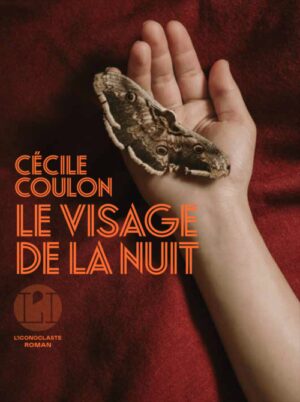
In the closed world of a village, the unleashing of passions around a monster and an angel.
He was a beautiful child but, following a deadly fever and the intervention of a healer, he pays for his recovery with a hideously disfigured face. He will live but, in everyone’s eyes, he will be a monster. Abandoned by his father, a man hated by all, he is then taken in, educated and hidden by the village priest because, within Fond-du-Puits, a very small isolated hamlet, passions are violent and hatreds ancestral.
Despite his monstrosity, he becomes an intelligent, kind and lively boy. It is in the forest, at night, that he finds his freedom, and soon his calling as an embalmer. One evening, he meets for the first time a girl his age whose family lives on the margins of the village. Her brother must also remain hidden: he bears the burden of too great a beauty. A dangerous beauty because it arouses unhealthy passions. A strong and dangerous relationship then forms between the young girl and the monster.
We find again in Le visage de la nuit the lost village of Fond-du-Puits, where Cécile Coulon’s previous novel, La langue des choses cachées, was already set. While the latter was dense in its plot and writing, Le visage de la nuit unfolds over some fifteen years and offers a complex story with characters who are always just as ambivalent. Angels and monsters merge, idiocy rubs shoulders with knowledge, love leads to murder, life is rooted in death. The reader is drawn into a poetic maelstrom with muted resonances. In the closed world of a damned village, all the passions clash, which Cécile Coulon’s lyrical language makes vibrate with intensity.