
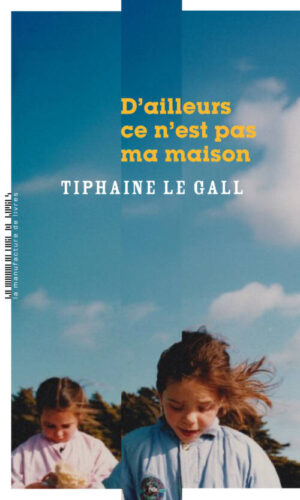
In Brest, a woman finds herself alone in her house and wonders how this place has shaped her. What led her to settle within these walls years ago? And how does one learn, after a breakup, to truly inhabit a space? She traces back through her life and the places that formed her. Immediately, a figure emerges: Louise, the childhood friend who died prematurely, embodying a double rooted in this phantasmagorical Finistère, whom the narrator resurrects to question her own path.
Through a constellation of fragments, Tiphaine Le Gall weaves a narrative between past and present, in a form of intimate, temporal correspondence. D’ailleurs ce n’est pas ma maison (After All, This Is Not My Home) is a meditation on the imprint of places—those that precede us, shape us, and transform us despite ourselves.

