
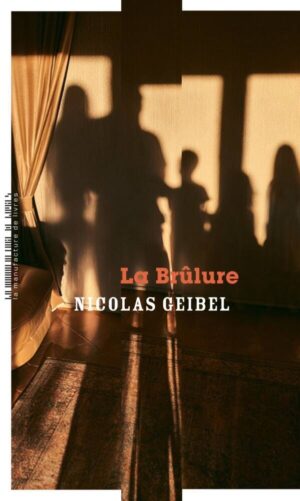
It took these two questions, asked by the father, for the narrator’s childhood to resurface abruptly in adulthood.
At first, what emerges is the portrait of an ordinary German family in Frankfurt in the 1990s: the father, the mother, the two sisters M. and S., and the eldest son, Nicolas.
But behind this presumed normality, violence proves to be everywhere: within the parental couple, bound together by control and humiliation, and toward the three children, who are manipulated and abused. This violence seems to extend into a German history whose weight is passed down without ever being spoken: a grandfather who was a Wehrmacht soldier and is admired, and a grandmother who lived through the violence of the Russian occupation.
La Brûlure (The Burn) is the story of a man who can no longer avoid the past. Nicolas relives it in his flesh and seeks to wash it away in the white, clean space of a hospital room. He writes it in French, a language unknown to his family, to express what German could neither say nor think, and to try to set something against the pain: a piece of literature.

